Why Physical AI Is Becoming Essential for Critical Infrastructure
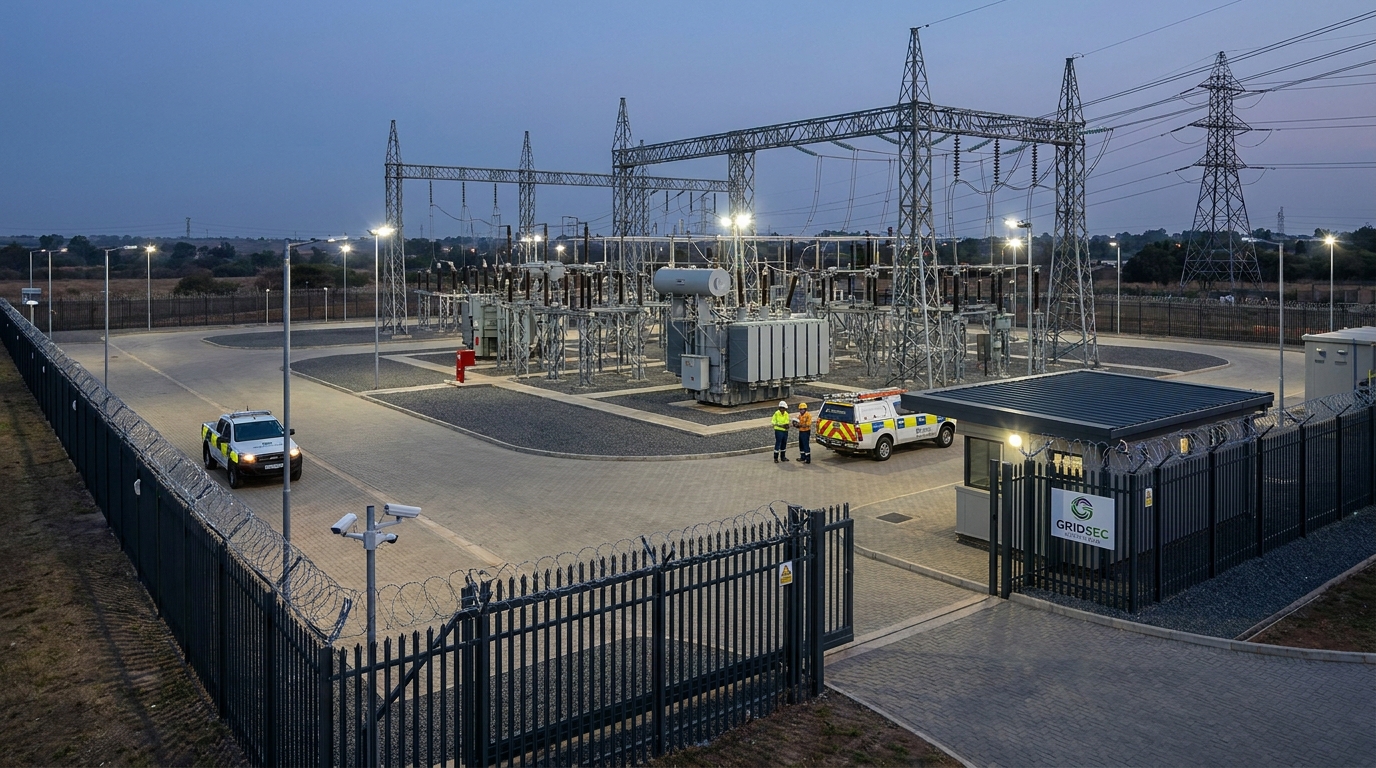
Water, energy, telecommunications and public transport all share one trait: the margin for error is close to zero. An undetected perimeter breach, an unmonitored technical zone, or an operational anomaly caught too late can interrupt a service hundreds of thousands of people depend on. This is exactly the terrain where physical AI — AI systems that can perceive, understand and reason about the real world through existing cameras — delivers the most value, and where it’s hardest to get right.
At SYRATE, we deliberately built ServEYE on this difficult terrain rather than on simpler use cases like retail or office spaces. Here’s why critical infrastructure is both the hardest test for physical AI and the place it matters most.
The gap between video surveillance and video intelligence
Most critical infrastructure sites are already covered by cameras — often hundreds, sometimes thousands, spread across multiple facilities. The problem has never been a shortage of video feeds. The problem is that raw video is only useful if someone is watching it at the exact moment something happens. A human operator can’t meaningfully monitor more than a handful of screens at once, and vigilance fatigue sets in within minutes, not hours.
Physical AI shifts the job from “watching” to “understanding.” Instead of streaming 500 feeds into a control room and hoping a human notices the anomaly, the system watches continuously, understands what’s normal for each specific zone, and only alerts an operator when a real, verified event happens — with the context needed to act immediately, not just a notification.
Why critical infrastructure is a different kind of use case
Three constraints separate critical infrastructure from most other intelligent video deployments, and each one directly shaped how we built ServEYE.
Connectivity isn’t guaranteed. An industrial site or a remote water treatment station doesn’t always have a stable internet link. A system that depends on a permanent cloud connection to function fails at exactly the moment a network outage happens — often alongside another incident. Inference has to keep running locally through an outage, with sync resuming automatically once the connection returns.
Viewing conditions are difficult. Dust, backlight, darkness, ageing optics, rain: critical infrastructure cameras rarely see clean, textbook footage. A model trained only on clean data fails in the field. Our models are calibrated on each site’s actual scenes, not a generic dataset.
A false alert has a real cost. In an environment where every alert can mean mobilizing a security team or triggering an emergency procedure, noise isn’t a minor annoyance — it erodes trust in the system until operators start ignoring it. That’s why ServEYE corroborates events across multiple cameras before anything escalates to a human, rather than forwarding every raw detection.
Data sovereignty isn’t negotiable
For water, energy and telecommunications, surveillance footage is often classified as sensitive data under national regulation. A critical infrastructure operator generally can’t afford to send its video feeds to a cloud platform hosted abroad, even for a trusted vendor. ServEYE is built to run entirely on-site — able to operate air-gapped, with no outbound connection at all, and full audit trails of who accessed what and when.
What this actually changes on the ground
In the deployments we’ve run across industrial sites and critical infrastructure in Senegal, the most concrete gains don’t come from one flashy feature — they come from the accumulation of small removed frictions: a perimeter breach spotted and corroborated within seconds instead of being discovered on the next patrol round; a technical zone that automatically alerts if an unauthorized person enters it; an agentic video summary generated automatically for every incident, saving hours of manual review during post-incident investigations.
These are modest gains taken individually, but they become significant at the scale of a site running dozens of cameras around the clock — and that’s exactly the scale where physical AI stops being an experiment and becomes operational infrastructure in its own right.
If you run an industrial site or critical infrastructure facility and want to evaluate what physical AI could change on your own ground, our team can run ServEYE directly against a sample of your own cameras.